
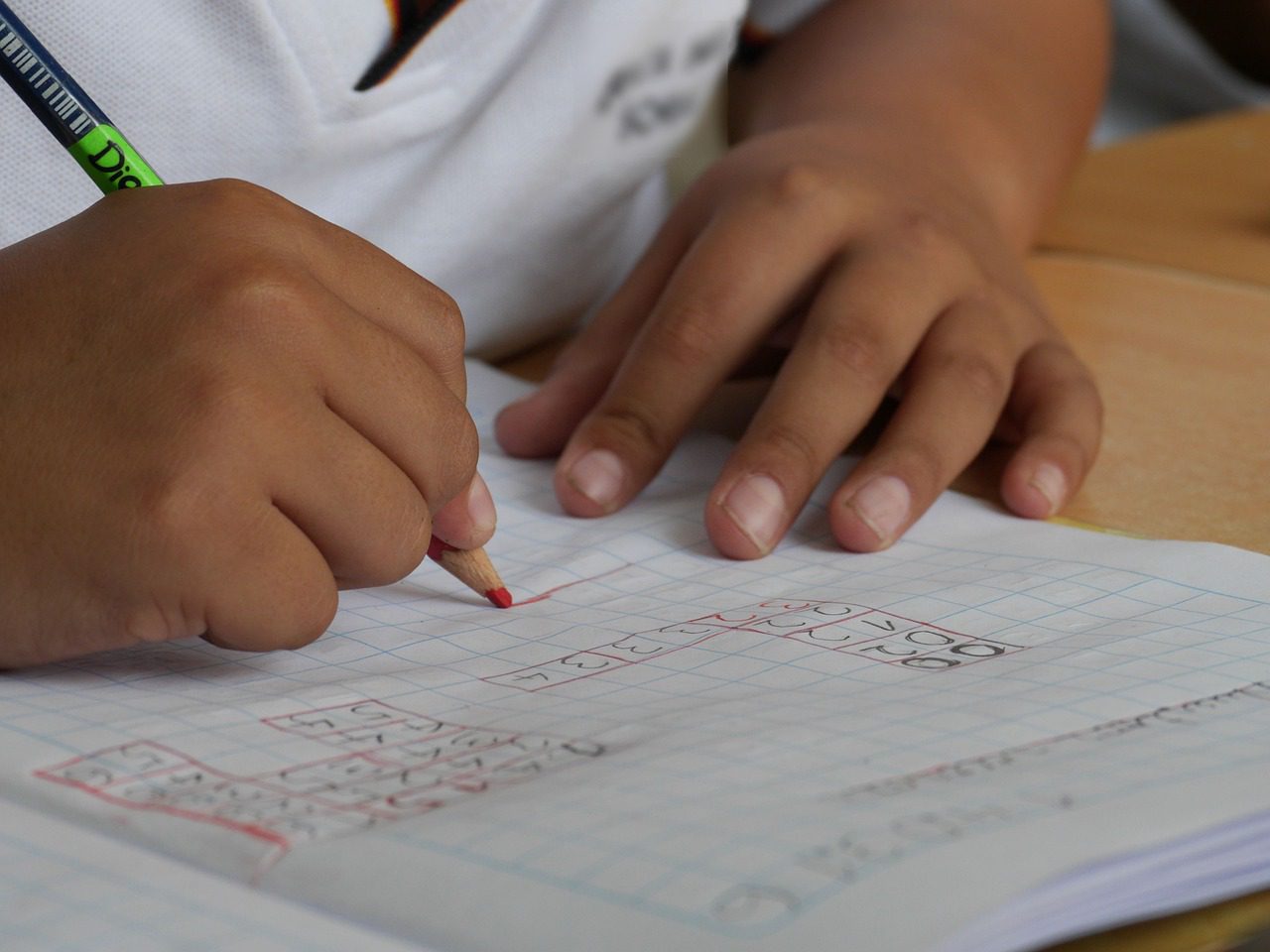
Writing is my passion. It’s a privilege to have the thing I would do even if I wasn’t paid for it. Strangely, I don’t have the same affinity for handwriting. You know, the kind that has evolved over eons from cave drawings to the use of a feather quill and ink and the more recent pencil and ballpoint pen. Journaling is a form of release or therapy that many use and enjoy. I clearly understand its therapeutic value. I don’t hate it. It’s just not my go-to for release or when I’m thinking, creating.
Give me a keyboard and I’m happy. I love the freedom to type, delete, rewrite, move words around, change paragraphs, and so on. Is it a remnant of my controlling personality? I find that watching something take shape on a blank white canvas is glorious. It’s the unpacking and repackaging. And it’s neat. It also does its bit for the environment.
Why would I be surprised that my Generation Alpha kids didn’t dive into writing like the proverbial ducks to water? My progeny jumped on voice recognition AI quicker than I could say the alphabet. It took me a while to figure out how they could find stuff on Google when I knew that they couldn’t spell some of the search words used. Here I am, still not comfortable with WhatsApp voice notes. I guess it’s the editor in me. It would take forever to get the ‘perfect’ message. Typing is quicker. I see it. I edit it. Love that new functionality.
Education has to come in
It’s hard to discuss writing without bringing in education. The education system. Each time those words spill out, I feel a growing resentment. Mr T used to think that my views were extreme. But over recent years, I’m comforted that he’s aligning.
An international study conducted in 2021 found that eight out of 10 South African school children struggle to read. This placed us last out of 57 countries even though literacy ‘rose’ from 78% in 2016 to 81%. Who’s lying? Or rather, where’s the lie?
The lie is hidden deep within the ‘Tale of Two Systems’. There’s the public system that has deteriorated over the years, arguably with pockets of ‘excellence’ sprinkled here and there. I’m being kind and diplomatic. These ‘better’ schools are mainly found in the suburbs, also known as Model-C or more directly, white schools before 1994.
Conundrum of the middle class
Then there’s the private system which has flourished at the expense of government incompetence. Opportunity in crisis, right? This is largely supported by the “middle class”. In Mzansi, it’s labelled as such, but we don’t have a solid mid-tier tax-paying base. This social stratosphere is like putting a crown on a pig and calling it a princess. It’s just flowery semantics. Many allocated to this bracket live from month to month, indebted on credit, and limited or no savings, all worsened by COVID-19.
The second more poignant abnormality is that, in other societies, private education is the realm of wealthy, upper-class families. So, we have a private education system that’s mainly supported by a parent/caregiver base in a hostage situation with no handcuffs or guns and an open door. The ‘freedom of choice’ is another illusion.
You have ‘saviours’ who are masterful marketers, superior sellers, and bourgeoning businesses. They’ve created demand at the intersection of elitism and the lure of quality education. Who doesn’t want a better opportunity for their children? There are two anchoring promises that every private school sells.
The promises of private school
First, they are preparing your child for the future. With the same traditional curricula in a ‘glossy’ makeover of new brands, beautiful properties, stylish uniforms, contemporary hair policies, and other peripheral adjustments. Why are we still preparing our children for university when those institutions are outdated? In South Africa, kids aspire to university, get there as ‘first generation entrants’, get a degree, sometimes several, and can’t get a job. We all know the unemployment stats; I won’t waste your time. Is that the future?
The second promise they all make in some form or another, is that your child is unique, a creator, a leader, an innovator. Until your child shows them that they’re different. The minute that happens, they open the door to another budding sub-sect of the edu-economy, the therapists, psychologists, and more to ‘fix’ said child. Be prepared to spend once you go down that rabbit hole.
Teaching what to learn, not how to learn
How are we preparing our children for the future when we’re ignoring what I consider the basics in a digital age? Yes, most private schools have included robotics and coding in recent years. They love to profile that in their marketing campaigns to show how they’re ‘addressing the future’. But my experience is that it is surface-level, ticking a box. They’re not going full-on like they do with the stock-standard subjects. You know, those that teach our kids what to learn, not how to learn.
I had the recent painful experience of watching my 10-year-old type some elements of his assignment using one finger and no clue about the arrangement of letters on the QWERTY keyboard. Why aren’t we teaching our kids to type from a young age? The writing helps with fine motor skills, I hear you say. Is that the only way to improve these skills? Come on, where’s the innovation and adaptability?
If you were born in the 1970s and 80s and still write today, why do you do it? Is it a business/job requirement? Is it therapeutic? Bring in a generation that swipes, watches videos, and uses AI and you see why my first-born can’t understand why he must use a physical dictionary over the digital one. I’m forcing him to use the book even though he’s proved that it is quicker. Yes, I was stupid enough to take on that challenge. That’s what you get when you have a big-thinking, old soul who always questions. And loves experiments. His favourite line, “Just one question…” which usually results in follow-ons.
I know that change is hard. I know that the ‘tried and tested’ is what we default to. It also keeps us stuck and fearful. My ask today, dear hearts? Let’s not stand in the way of trying new things and asking questions. And when you mark your X on 29 May, think of the future. We all know that Load Shedding is raring to return as soon as ballots close. He’s had a lovely long holiday – my app says “about a month” – and his cousin Unplanned Outages has been working continuously throughout that period and deserves his break…
Recent Comments